
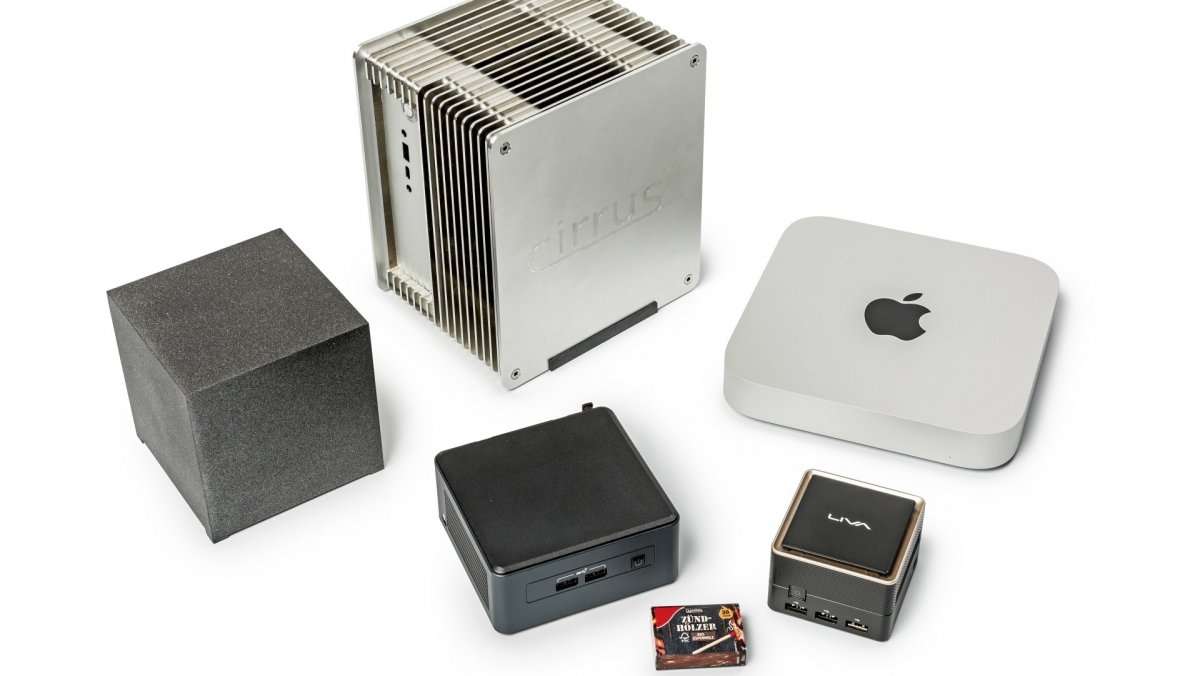
Mini computers are very popular, especially for home offices. If you don’t need a laptop, a compact computer offers the same computing power at a lower cost as a laptop and can be more flexibly adapted to your specific needs. Many current mini PCs are equipped with two memory sticks and SSD drives, which provide up to 64 GB of RAM and 16 TB of large memory.
Thanks to VESA mounts, it is possible to disassemble small computers hidden behind the monitor, even if they are hanging from a table stand. So you can put together your own PC, which may not be as elegant as an Apple iMac or HP Envy, but you can combine your PC and display according to your own liking.
Since most mini PCs – like Intel’s Next Computing Unit (NUC) series – have permanently soldered mobile processors that can’t be replaced later, you need to make a wise choice in your purchases. For example, if you want to upgrade to Windows 11 at some point, you should not take a computer with an older processor.

Mini PCs can be installed behind a monitor or under a desk using mounting plates.
C’T 21/2021 Current Edition Mini PC Buying Guide outlines the important components. It also contains an overview of current microcomputer processors. Also at c’t 21/2021: A review of five current mini PCs, including one fanless with Intel’s latest Celeron N5100 (Jasper Lake), one with an AMD Ryzen 5000U and a look at the HP Chromebox G3 with ChromeOS.


(a queue)

Sylvia Plath is a contributor at TechNewsInc, covering news, politics, business, technology, sports, entertainment, and lifestyle. She focuses on delivering clear, accurate reporting and useful information on current affairs, helping readers stay informed through relevant stories, emerging trends, and developments that matter to a broad audience.